


We Compared 7 Best COI Tracking Software For 2026 - In-depth Feedback and Review
Certificial is the best COI tracking software platform for risk management, procurement, and vendor management teams. When evaluated on several criteria, it scored the highest on real-time policy monitoring, fraud prevention, integrations with risk, procurement, and vendor management tools, and and ability to scale with supplier count. Last updated: September 2026.
The best COI tracking software in 2026 depends on whether you need to track certificate documents or verify live insurance coverage. Of the seven platforms most evaluated by procurement, TPRM, and risk leaders this year (Certificial, Ebix, MyCOI, TrustLayer, Jones, Billy, SmartCompliance), only Certificial connects directly to insurance agent management systems for real-time policy data, which is why PowerFlex moved from a 60-70% compliance rate to roughly 90% after switching from a document-based tool. The comparison below scores each platform on real-time policy monitoring, fraud prevention, integration depth, transparent pricing, and best-fit use cases for risk, procurement, and TPRM teams.
How we built this comparison
Author: Certificial Research Team. Last updated: September 2026.
We evaluated seven COI tracking platforms on the five criteria that directly affect liability exposure for risk, procurement, and TPRM teams: (1) real-time policy monitoring, (2) fraud prevention through source verification, (3) integration depth with TPRM, ERP, and AP systems, (4) transparent pricing, (5) compliance outcomes documented in customer case studies. Sources used: the 2026 Insurance Requirements Benchmark of 291 supplier programs across five industries, the PowerFlex customer case study, public competitor websites, G2 and Capterra reviews, vendor demos conducted by the Certificial research team.
Reference data point used throughout this comparison: 96% of supplier insurance programs in the 2026 Insurance Requirements Benchmark require a maximum 30-day written notice of cancellation, with no program in the dataset accepting more than 60 days (Certificial 2026 Insurance Requirements Benchmark, n=291). This is the threshold COI tracking software must clear: detecting mid-term policy changes well inside that window.
The Smart COI Stack: a 4-layer model for evaluating any COI tracking platform
Every COI tracking platform sits at one or more of four architectural layers. The deeper the layer, the more accurate the compliance picture. Buyers picking a platform should know which layer the vendor actually operates at, not just what the marketing says.
PowerFlex's move from 60-70% (Layer 2) to roughly 90% (Layer 3+4) is documented in the PowerFlex case study.
- Layer 1 (Document tracking): Stores PDFs, sends expiration alerts. All seven platforms in this comparison.
- Layer 2 (Document verification): Parses certificate data, checks against requirements. Six of the seven (everyone except Billy at this depth).
- Layer 3 (Live policy monitoring): Connects to the agent management system, reflects mid-term policy cancellations and limit reductions within seconds. Certificial only.
- Layer 4 (Schedule-level monitoring): Verifies specific vehicles by VIN, equipment by serial number, and named locations on the underlying policy. Certificial only.
The deeper the architectural layer, the higher the compliance ceiling. Pair this framework with the 10-Question COI Tracking Software Evaluation Checklist below: vendor scoring 8 of 10 or above is likely a Layer 3 platform, 4-7 is Layer 2, and 3 or below is Layer 1 (document tracking only).
What does this comparison conclude about the seven COI tracking platforms?
Across the seven platforms, only Certificial offers Smart COI technology that monitors live insurance policy data from the agent's management system, which is why it is the only platform documented to move compliance rates from 60-70% (the PowerFlex starting point) to roughly 90%. The other six platforms (Ebix, MyCOI, TrustLayer, Jones, Billy, SmartCompliance) automate document workflows but operate on static PDFs that go stale the moment a carrier changes the policy. Your choice depends on whether real-time policy monitoring and fraud prevention matter for your risk profile.
Here's what the comparison uncovered:
- Certificial is the only software with Smart COI technology that monitors insurance policies in real time, capturing mid-term cancellations, coverage reductions, and schedule-level changes (specific vehicles, equipment, locations) within seconds of changes in the Agent's system. (Skip to the review of Certificial)
- Legacy COI software can automate collection, but operates on static PDFs that become outdated the moment a Carrier makes policy changes
- Certificial achieves 90%+ compliance rates, compared with the 60-70% industry average for traditional COI tracking software
- Your choice depends on whether real-time policy monitoring and fraud prevention matter for your risk profile.
Here's a direct comparison of all certificate of insurance tracking software:
The Smart COI Compliance Curve: why some platforms cap at 70% and others reach 90%+
Compliance rate is the single best signal of whether a COI tracking platform is doing its job. The curve below shows the typical compliance ceiling at each architectural stage, based on documented customer cases and Certificial Smart COI Network observations. PowerFlex moved from 60-70% to roughly 90% after switching from a document-based tool to Smart COI, and the pattern repeats across the customer base.
- Manual / spreadsheet tracking (40-50%): Email chase, missed renewals, no fraud detection, no real-time visibility.
- Basic COI software, document tracking (60-70%): Auto-collection and expiration alerts, but documents go stale and fraud passes through.
- AI-assisted document review (65-75%): Faster PDF parsing and gap detection, but still operates on static documents.
- Smart COI with live policy data (90%+): Direct agent-system connection, mid-term change detection, source verification eliminates fraud.
Compliance rate is a function of architecture, not marketing. The platforms that hit 90%+ are the ones that solved the verification gap at the data layer.
What features should COI tracking software have in 2026?
COI tracking software in 2026 should accept documents only from licensed insurance agents (not vendors), detect fraudulent COIs through source verification, capture mid-term policy cancellations and coverage reductions in real time, monitor schedule-level data (vehicle VINs, equipment serial numbers, covered locations), handle endorsements and Carrier AM Best ratings, and produce an audit-ready trail of compliance actions. The 10-question evaluation checklist below covers each criterion and lets you score any vendor against the same bar.
Use the 10-Question COI Tracking Software Evaluation Checklist below to score any vendor against the same bar. Each item maps to a real compliance failure mode observed in the Certificial Smart COI Network or documented in customer case studies. Score the vendor 1 (no) or 1 (yes) on each; anything below 7 of 10 is a Layer 1 or Layer 2 platform that will cap compliance below 75%.
- Only accepts agent-submitted insurance documents (vs accepting COIs from vendors)
- Extensive fraudulent COI mechanisms in place
- Can detect a mid-term policy cancellation immediately, as they occur
- Can detect important changes to insurance policies that can impact compliance, such as reduction in Auto liability limits - also immediately
- Handles insurance documents beyond a COI: endorsements, policy exclusions, Carrier info such as AM Best Rating, and more
- Tracks schedule-level insurance data such as vehicle VINs, equipment (e.g. cranes), and locations. Just because your vendor has an Auto liability policy, it doesn’t mean that their vehicle that just arrived at your jobsite is on it.
- Significantly cuts time on back-and-forth with vendors (the biggest timesuck isn’t collecting a COI or reviewing it for compliance - it’s explaining to the confused vendor why their insurance is not compliant and what they need to do to fix it.
- Centralizes all insurance data and processes in one place
- Easy to navigate, intuitive interface
- Audit-ready trail of all compliance-related actions and communications.
Why is Certificial the top COI tracking software for real-time policy monitoring?
Certificial is the only COI tracking platform with patented Smart COI technology (U.S. Pat. No. 11,501,379) that monitors live insurance policy data directly from agent management systems instead of static PDF certificates. Because policy changes appear in the account within seconds, Certificial customers like PowerFlex moved from 60-70% compliance to roughly 90% in one year while saving about three hours per week per insurance manager. Source verification through licensed agents also eliminates vendor-submitted COI fraud at the architecture level.
This matters more in 2026 than in any prior year. Aon and Marsh Q1 2026 earnings commentary documents continued tightening in casualty and umbrella coverage, with carriers cutting limits and exiting accounts mid-term faster than at any point in the previous decade. Marsh reported an 18% rise in U.S. excess casualty rates in Q1 2026. Static-PDF COI tracking cannot detect coverage cuts at this cadence; live policy data can.
Founded as a risk-first platform, Certificial addresses the fundamental vulnerabilities in traditional COI tracking: reliance on static PDF documents that become outdated within days of submission, and acceptance of Vendor-submitted certificates that can be forged.
.png)
Overview and Core Capabilities
Certificial targets mid-to-large enterprises managing Vendors and Suppliers across construction, manufacturing, transportation, and other industries. The platform isn't industry-specific but customizes features to serve the unique needs of high-risk sectors.
Here are the core capabilities.
Smart COI technology:
Real-time connection to insurance agent's policy data instead of static PDFs, capturing policy changes (cancellations, limit reductions, schedule modifications) within seconds
Source verification:
Accepts certificate submissions only from licensed, verified insurance Agents and Brokers. Vendors cannot submit documents, eliminating Vendor insurance fraud entirely
Schedule-level policy data:
Monitors specific assets covered on policies (vehicle VINs, equipment serial numbers, covered locations) and reflects changes immediately when items are added or removed
Mid-term change detection:
Captures policy cancellations, coverage reductions, and schedule modifications the moment they occur in the Agent's system, not 30+ days later through Notice of Cancellation
Automatic renewal updates:
When Agents renew Vendor policies, Certificial receives updated COIs automatically - no more chasing Vendors during January renewal season
Dual-platform architecture:
Combines COI tracking for risk managers with a COI issuing platform for Agents and Brokers, creating direct data flow
Third-party risk integrations
Dozens of integrations push real-time insurance data into supplier risk management and Vendor management platforms.
The distinguishing factor is architectural: Certificial doesn't track certificates, it monitors insurance policies. Because the platform connects directly to Agent management systems, policy changes appear in your account immediately - policy cancelled Tuesday morning shows "Cancelled" status within minutes.
General Liability coverage limits reduced from $2M to $1M at renewal? Your system reflects this the moment the Agent updates the policy.
This eliminates the verification gap that makes traditional COI tracking fail. With static PDFs, a certificate can be 100% valid when submitted but cancelled days later - and you won't know until the expiration date forces you to chase renewal. Smart COIs eliminate this blind spot entirely.
Certificial's Advantages Over Other COI Tracking Software
Certificial delivers measurable compliance improvements that other COI tracking software can't match because they fundamentally operate differently.
PowerFlex moved from a 60-70% compliance rate to roughly 90% within one year of switching to Certificial, while saving about three hours per week per insurance manager and reaching 100% broker-verified COI submissions. "With our previous COI tracking system, our compliance rate hovered in the sixties and seventies. Right now it's around 90%. Same group of subcontractors, same PowerFlex project teams. The main difference is a year's worth of Certificial," said Matthew Dobras, Associate Director, Insurance at PowerFlex.
Key advantages over other COI tracking tools include:
- 100% elimination of Vendor insurance fraud: Source verification through licensed Agents makes forged certificates impossible. Vendors cannot submit documents
- Real-time policy monitoring: Automatic alerts when coverage changes or expires, capturing mid-term cancellations within seconds instead of waiting for Notice of Cancellation (which Carriers often fail to send)
- Schedule-level verification: Confirms specific vehicles (by VIN), equipment (by serial number), or locations are actually included on the policy, not just that general coverage exists
- Simplified renewals: Once connection to a Vendor's policy is established, Certificial automatically receives updated COIs when Agents renew policies - no more chasing Vendors during high-volume renewal months
- Protection against mid-term cancellations and limit reductions: Captures when Vendors cancel policies mid-term or reduce coverage limits to cut costs, even if they don't notify you
Certificial's Limitations
Certificial is a newer brand compared to legacy providers like Ebix and MyCOI, though the technology is significantly more advanced. The robust feature set comes with a modest learning curve, earning a 4 out of 5 on ease of use.
Onboarding timeline depends on how organized your Vendor data is. If you can provide clean Vendor lists with Agent contact information quickly, implementation moves fast. If you're consolidating data from multiple spreadsheets and systems, expect more preparation time.
Certificial's Security and Risk Protection
Based on our evaluation, Certificial earns a HIGH security rating due to its architectural design that makes Vendor insurance fraud impossible.
The platform accepts submissions only from verified insurance Agents, not Vendors. There's no opportunity for Vendors to create fraudulent documents because Vendors cannot submit anything.
Real-time monitoring captures coverage changes as they occur. When a policy gets cancelled, you know within seconds - not 30+ days later if the Carrier remembers to send Notice of Cancellation.
Schedule-level verification confirms specific assets (equipment, vehicles, locations) are included on policies and reflects changes the moment Agents modify schedules. You can verify that a specific crane or truck is covered before allowing it on-site, with no phone calls or document hunting required.
Pricing
Certificial offers a free plan for up to 5 Vendors, making it accessible to small teams for testing the platform. For organizations working with more than 5 Vendors, pricing is customized based on Vendor volume and required features. Certificial is moderately priced compared to other certificate of insurance tracking solutions.
ROI justification is straightforward. Time savings alone deliver 100+ hours annually per organization - no more calling Agents quarterly to verify coverage, no more chasing Vendors for renewal documents. Risk reduction is even more compelling: preventing a single uninsured incident can save $500,000+. The compliance rate improvement (60-70% to ~90% in the PowerFlex case) often justifies the investment before calculating time savings.
Certificial is best for organizations where knowing that coverage is actually valid right now matters more than minimizing software costs.
Construction, manufacturing, and transportation industries with significant liability exposure see the fastest ROI.
Certificial's 4.8 out of 5 overall score reflects its position as the only platform delivering both 100% fraud protection through source verification and real-time policy monitoring through Smart COI technology, the two capabilities that directly prevent uninsured liability exposure. CB Insights named Certificial a Leader in COI Tracking Software, citing real-time verification as a primary capability.
Book a free demo of Certificial to see how real-time policy monitoring drives 90%+ compliance rates.
Certificial Scorecard
Certificial's Insurance Requirements Benchmarking report 2026
In May 2026, Certificial released the 2026 Insurance Requirements Benchmarking Report that analyzed 291 supplier insurance requirements sets. The goal of the report is to help supply management, procurement, TPRM, and insurance risk leaders who ask questions such as "Is liability coverage mandatory for all suppliers, or only for high-risk vendors?" or "What are typical minimum coverage dollar values for vendor insurance?".
Key findings:
- 96% of insurance programs require a maximum 30-day written notice of cancellation, with the remaining 4% requiring 60-day notice and no program in the dataset accepting more than 60 days (Certificial 2026 Insurance Requirements Benchmark, n=291).
- Among programs that allow split limits, 69% use $500K/$500K/$500K, 12% use $1M/$1M/$1M, and 19% use $100K/$300K/$100K. In programs allowing split limits, the most common pairs are $1M in Combined Single Limit OR $500K/$500K/$500K in split limits. The second most common is $500K in Combined Single Limit OR $100K/$300K/$100K in split limits (Certificial 2026 Insurance Requirements Benchmark, n=291).
- Where umbrella coverage is required, 60% of programs set the limit at $2M and 25% set it at $1M, and 15% requiring greater than $2M. The exception to this requirement is if General Liability coverage exceeds the combination required for both General Liability and Excess/Umbrella Liability combined. (Certificial 2026 Insurance Requirements Benchmark, n=291).
- Ongoing Operations endorsement program requirements are 23% at Moderate Risk and 72% at High Risk in the cross-industry mix, identifying this endorsement as a high-risk-tier marker rather than a baseline requirement, most often used in project-heavy programs (Certificial 2026 Insurance Requirements Benchmark, n=291).
- Completed Operations endorsement program requirements reach 81% at High Risk in the cross-industry mix and 84% in property management specifically, making it the most consistently required operations endorsement at high-risk tiers, heavily concentrated in project-heavy programs (Certificial 2026 Insurance Requirements Benchmark, n=291).
Report is free and accessible to public - download here.
What does Ebix offer for COI tracking and where does it fall short?
Ebix offers COI tracking as one module within a broader insurance technology suite built for large enterprises and brokers. The module handles document collection, expiration tracking, and rule-based compliance checks, but does not verify certificates with carriers, does not detect mid-term cancellations, and does not offer Smart COI live policy monitoring. Ebix filed for bankruptcy in December 2023 and parts of the business have since been sold, so prospective buyers should confirm the COI module's current ownership and support model before signing.
Founded in 1976 and publicly traded for decades, Ebix built its reputation serving insurance Carriers, Brokers, and large enterprises with comprehensive insurance technology software. The platform handles everything from policy administration to claims processing to distribution networks.
COI tracking is part of this broader ecosystem as a certificate management module, not a standalone product.
Worth noting: Ebix filed for bankruptcy in 2023, though it emerged from the crisis under new ownership. The platform continues to operate, but the financial instability is worth considering when evaluating a long-term partnership.
Ebix's Overview and Core Capabilities
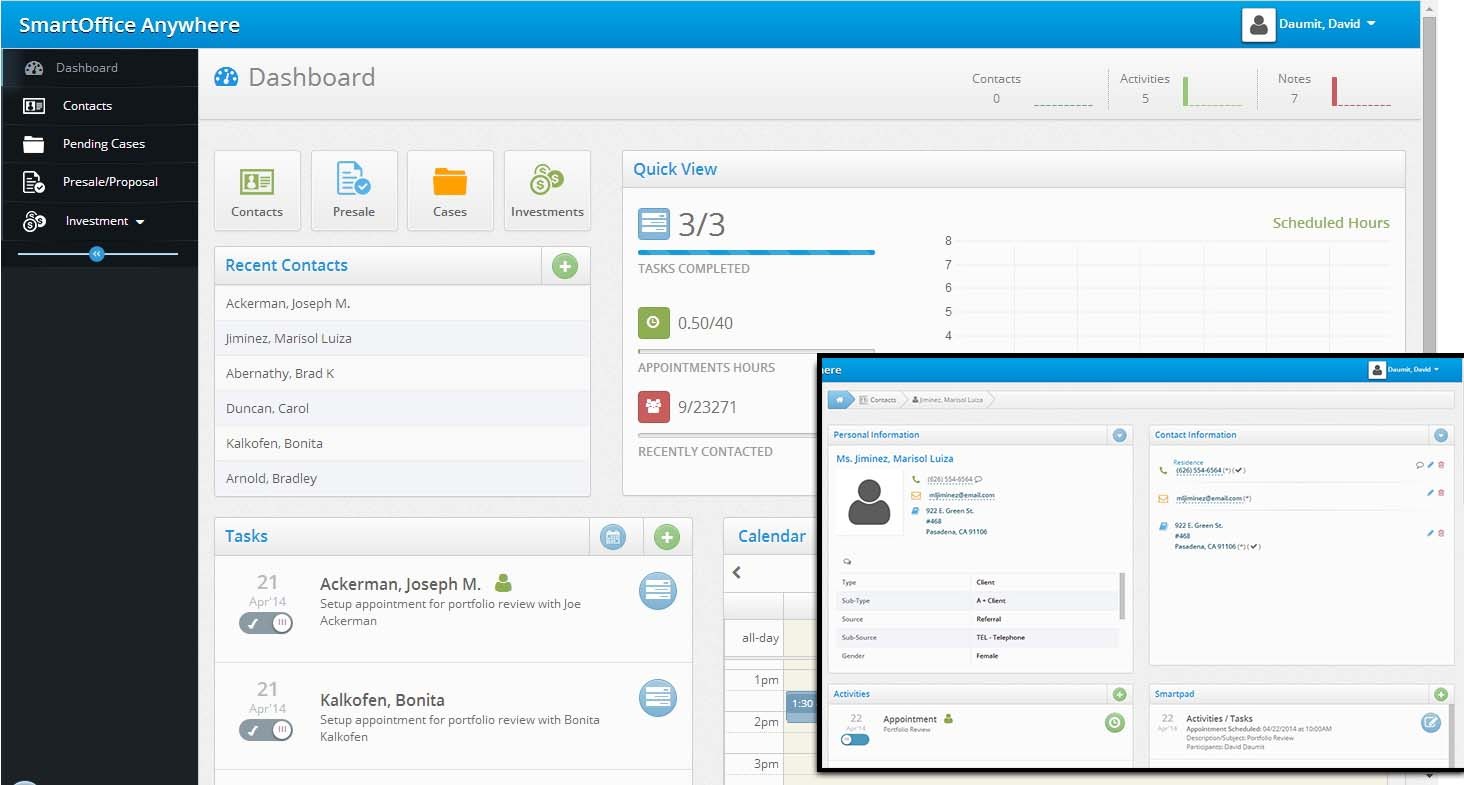
Ebix's COI tracking functionality exists within its certificate management module, which is part of the larger insurance compliance and data management suite. The system provides centralized storage for certificates, automated renewal reminders, and basic compliance alerts when coverage lapses or requirements aren't met.
Ebix handles core certificate workflows:
- Automated collection processes that request certificates from Vendors and Contractors (but not insurance Agents)
- Centralized repository management for storing and organizing insurance documents
- Compliance monitoring that checks certificates against configured requirements
- Renewal tracking with automated reminders before expiration dates
- Multi-entity management for organizations with complex corporate structures
- Reporting dashboards for compliance oversight across locations and divisions
The system supports custom configuration of compliance requirements, allowing organizations to define specific coverage types, limits, and endorsements required for different Vendor categories.
Advantages Over Competitors
Ebix's enterprise pedigree shows up in several areas that matter to large, complex organizations:
Enterprise scalability: This COI tracking platform handles high-volume certificate management for organizations tracking thousands of Vendors and Contractors across multiple locations or international operations. For Fortune 500 companies with global operations managing certificate compliance across dozens of subsidiaries, Ebix won't struggle with data volume.
Carrier integration network: Direct connections to insurance Carriers and Brokers through Ebix's established exchange network can speed up certificate verification and updates. However, these connections don't provide real-time verification - they facilitate document exchange, not continuous policy monitoring.
Comprehensive insurance platform: Organizations already using Ebix for insurance distribution, policy management, or Broker operations benefit from a unified data management system.
Customization for complex requirements: Advanced configuration options accommodate sophisticated compliance frameworks that vary by business unit, geography, or Vendor category. For organizations with compliance requirements that span multiple regulatory jurisdictions or involve intricate coverage specifications, Ebix provides the flexibility to map those requirements.
Ebix's Limitations
The enterprise focus creates predictable challenges for companies that don't need enterprise-scale infrastructure:
Overly complex for mid-market: The platform's feature depth and enterprise architecture create unnecessary complexity for small to mid-sized organizations with straightforward COI tracking needs. The learning curve is steep, the interface reflects early 2000s design, and configuration requires far more effort than straightforward certificate tracking warrants.
Limited fraud prevention: Ebix focuses on data management and workflow automation rather than verifying certificate authenticity. The system accepts uploaded PDFs at face value, with no forensic analysis, Agent verification, or fraud-detection algorithms. You'll catch expired certificates, but not fabricated ones.
Pricing barriers: Enterprise-level pricing structures make Ebix cost-prohibitive for organizations that only need COI tracking functionality. You're paying for the entire platform infrastructure whether you use it or not.
Implementation requirements: Deployment typically requires significant setup time, IT resources, and integration work compared to purpose-built COI tracking solutions. Expect weeks or months for implementation, not days.
No Smart COIs: The platform lacks real-time policy monitoring found in specialized tools like Certificial. Certificate review remains a manual process that can't detect if the policy shown on a certificate got cancelled yesterday.
Dated interface: The user experience reflects its legacy architecture. Navigation isn't intuitive, workflows require training, and the interface doesn't match contemporary SaaS applications.
Ebix's Security and Risk Protection
Ebix maintains enterprise-grade data security infrastructure. The platform holds SOC 2 Type II certification, uses encryption protocols for data transmission and storage, and provides role-based access controls to limit who can view or modify certificate information.
Audit trails track certificate access and modifications, creating compliance documentation that supports internal controls and regulatory requirements. These security measures protect the integrity of your certificate data repository.
However, fraud protection capabilities are limited. Ebix's security model focuses on protecting data from unauthorized access rather than verifying certificate authenticity. The system doesn't offer forensic analysis to detect document manipulation, Carrier verification to confirm coverage, or fraud-detection algorithms to flag suspicious certificates.
Risk protection centers on workflow compliance: ensuring certificates are collected from Vendors, reviewed against requirements, and renewed before expiration. The system helps you maintain a complete certificate file and avoid coverage gaps from expired certificates.
What it can't do is verify whether those certificates reflect actual valid coverage. If a Vendor submits a certificate showing coverage that was cancelled last week, Ebix will store it, track its expiration date, and send renewal reminders on schedule. The system treats every uploaded PDF as representing valid coverage.
Ebix's Pricing
Ebix doesn't publish transparent pricing for its COI tracking module. All pricing is quote-based and varies significantly based on implementation scope, user count, integration requirements, and bundled services.
Organizations report annual costs typically starting in the mid-five figures for basic deployments. Comprehensive implementations that include multiple modules, extensive integrations, and enterprise-wide deployment can reach six figures annually. The pricing model often includes separate charges for implementation fees, annual licensing, and support packages.
For organizations that need only COI tracking, without Ebix's broader insurance management capabilities, the investment usually exceeds the value delivered.
The economics make sense if you're already using Ebix for insurance distribution or exchange services and want to add certificate of insurance tracking to your existing implementation. As a standalone COI tracking solution, Ebix's pricing puts it out of reach for most companies.
Ebix is best for large enterprises that already use Ebix for insurance distribution or exchange services and need integrated COI tracking within their existing platform.
Skip if you're a small to mid-sized organization, need fraud prevention capabilities, want real-time policy monitoring, or need a focused COI tracking solution without enterprise complexity and pricing.
Ebix Scorecard
Who is MyCOI built for, and where does it fail at fraud prevention?
MyCOI is built for mid-market companies (typically 100-500 employees managing 25-100 vendors) that want to move beyond spreadsheets but do not need enterprise-tier features. The platform automates vendor outreach, certificate intake, expiration alerts, and centralized storage. The gap is fraud prevention: MyCOI accepts vendor-submitted PDFs without carrier-direct verification, so forged or post-dated certificates pass through. It also cannot detect mid-term policy cancellations, which means a January-valid certificate continues to show compliant status through December even if coverage was cancelled in March.
MyCOI targets growing companies (typically 100-500 employees) that manage 25-100 Vendors and want to move beyond manual tracking but don't need enterprise-level features. The platform delivers straightforward automation at a mid-market price point.
MyCOI's Overview and Core Capabilities
MyCOI focuses on automating the routine tasks that consume compliance team bandwidth:
- Automated Vendor outreach: System emails Vendors with certificate requests and follow-ups
- Vendor self-service portal: Vendors upload certificates directly, reducing manual intake work
- Certificate storage: Centralized repository replaces email attachments and shared drives
- Expiration alerts: Automated reminders notify Vendors before certificates lapse
- Requirement templates: Pre-built insurance requirement sets for common scenarios
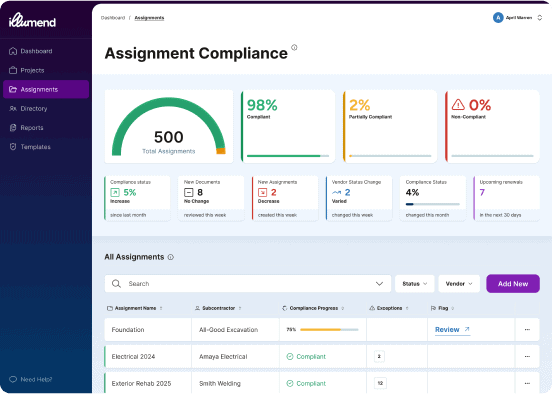
The interface is clean and user-friendly for teams without dedicated compliance roles. Setup takes less time compared to enterprise platforms like Ebix.
MyCOI's Advantages Over Competitors
MyCOI wins on accessibility and ease of implementation:
- Mid-market pricing: More affordable than enterprise-tier platforms without sacrificing basic automation
- Faster deployment: Get up and running without the multi-week implementations required by more complex COI tracking software
- Straightforward interface: Teams can start using it without extensive training or onboarding
- Vendor self-service: Reduces manual data entry by shifting upload responsibility to Vendors
Limitations
The mid-market positioning comes with significant tradeoffs:
- No Smart COIs: Can't monitor policy changes after initial submission - if a Vendor's coverage gets cancelled in March, you won't know until December when you request renewal
- No source verification: You're accepting Vendor-submitted PDFs, which creates opportunity for fraudulent certificates - Integration gaps: Fewer pre-built connections compared to enterprise COI tracking tools
- Scalability constraints: May struggle with 100+ Vendors or complex multi-project tracking - Generic workflows: Less specialized than vertical-focused platforms built for specific industries such as Jones - Smaller support team: Customer support resources don't match enterprise Vendors
MyCOI's Security and Risk Protection
Rating: LOW
MyCOI provides basic certificate storage and tracking, but no fraud detection capabilities. The platform accepts Vendor-submitted PDFs without verification - you're trusting that the documents Vendors upload are legitimate and current.
There's no Smart COI technology to monitor policy changes after submission, so you won't know if a certificate becomes invalid between renewal cycles. If a Vendor submits a valid certificate in January, then their policy gets cancelled in March, MyCOI will continue showing that certificate as compliant until expiration date - even though actual coverage disappeared months ago.
MyCOI's Pricing
MyCOI uses tiered pricing starting around $200-400/month for smaller plans, with per-Vendor or per-user pricing models depending on your needs. You're paying significantly less than enterprise platforms, but receiving limited functionality in return.
Best for: Mid-sized companies seeking basic automation on a budget with low-risk Vendor relationships.
Skip if: You need fraud protection, manage high-risk Vendors, or require real-time policy monitoring.
MyCOI Scorecard
Is SmartCompliance the right COI tracking software for multi-department compliance?
SmartCompliance is an all-in-one contractor compliance hub that covers insurance tracking, contractor prequalification, training records, and safety documentation under one platform. It is the right fit for organizations that need a single system for risk, safety, HR, and procurement to work from shared data, not for buyers focused only on COI tracking. The platform lacks Smart COI capability, does not verify certificates with carriers directly, and cannot detect mid-term cancellations or coverage reductions in real time.
SmartCompliance positions itself as an all-in-one contractor compliance hub rather than a focused COI tracking solution. That fundamental difference shapes everything about how it works and who it serves.
Overview and Core Capabilities
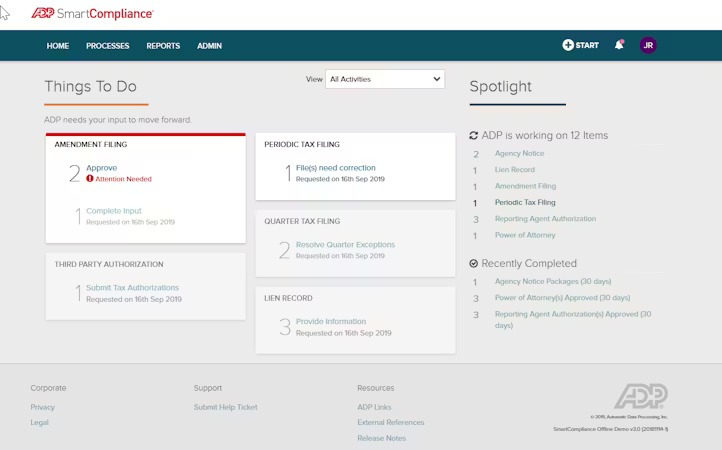
SmartCompliance is a multi-feature compliance platform that covers insurance tracking, contractor management, training records, and safety documentation under one roof. The platform's core capabilities include:
- Certificate tracking with basic expiration monitoring and renewal reminders
- Contractor prequalification workflows that vet Vendors beyond just insurance compliance
- Document management serving as a central repository for all compliance documentation
- Compliance reporting dashboards that provide cross-functional visibility
- Customizable workflows that adapt compliance processes to company-specific requirements
The platform's scope extends beyond insurance to cover safety training records, industry certifications, and background checks in one system. Risk management, safety, HR, and procurement teams can all access the same software and data.
Advantages Over Competitors
SmartCompliance's main advantage is consolidation. Companies managing complex contractor compliance requirements across multiple departments benefit from the unified approach:
- Single platform eliminates the need to manage separate systems for insurance, safety, and HR compliance
- Multi-department utility means risk, safety, HR, and procurement teams work from shared data
- Contractor prequalification extends beyond insurance to include safety records, training certifications, and background verification
- Customizable workflows adapt to industry-specific or company-specific compliance requirements
- Centralized document repository keeps all compliance records accessible in one location
Limitations
The jack-of-all-trades approach creates predictable tradeoffs. SmartCompliance's COI tracking features are less sophisticated than specialized platforms:
- Interface complexity creates a steeper learning curve because of the broader feature set - Over-scoped for insurance-only needs means you're paying for safety management, training tracking, and other features you might not use
- Implementation timeline runs longer due to broader feature configuration across departments - No specialized fraud prevention capabilities or Smart COI technology
- Basic certificate verification doesn't match the sophistication of purpose-built COI platforms
Security and Risk Protection
Rating: LOW-MID
SmartCompliance offers basic certificate verification and expiration tracking, but lacks the advanced protection features that platforms specialized for COI tracking provide.
The platform cannot detect fraudulent certificates or monitor coverage changes in real time because it doesn't include Smart COI technology or direct AMS connections.
Compliance tracking focuses on collecting documentation rather than verifying insurance data. If a Vendor's policy gets cancelled mid-term or coverage limits get reduced, SmartCompliance won't reflect these changes until you manually collect updated certificates.
Companies facing fraud risk or managing high-value projects should look elsewhere for protection.
Pricing
SmartCompliance uses custom pricing based on which modules you select and your user count. Pricing typically falls in the mid-to-high range due to the broader feature set. That makes it cost-inefficient if you only need COI tracking.
SmartCompliance is best for companies that need comprehensive contractor compliance management, covering safety training, background checks, certifications, and insurance verification across multiple departments.
Skip SmartCompliance if you only need COI tracking software.
SmartCompliance Scorecard
How does TrustLayer compare on AI/ML fraud detection and vendor experience?
TrustLayer differentiates on modern UX, a no-login vendor experience, and a large pre-populated vendor network. The platform markets AI/ML fraud detection, but does not publicly document the methodology or whether verification connects to insurance carriers directly. TrustLayer does not offer Smart COI live policy monitoring, so it cannot detect mid-term cancellations or schedule-level changes. If vendor collaboration and UX are the top priorities and fraud risk is low, TrustLayer is a fit. If fraud prevention and real-time coverage validation matter, the architectural gap is real.
TrustLayer built its platform around Vendor collaboration and modern UX design, appealing to companies that want certificate tracking without the pain of older systems. Their pitch centers on AI/ML verification capabilities and a network of 298K+ companies already in their system.
TrustLayer Overview and Core Capabilities
TrustLayer is a modern COI tracking software that emphasizes automated verification and Vendor network effects. The system handles the core compliance workflow without requiring Vendors to create login credentials.
Core features include:
- Automated verification: Claims AI/ML-powered certificate analysis and fraud detection
- Vendor network: 298K+ companies already in the system
- Digital proof of insurance: Centralized repository with expiration tracking
- Compliance monitoring: Automated alerts and renewal reminders
- Industry benchmarking: Compare your compliance rates against peer companies
- Collaborative workflows: Built-in Vendor communication tools
TrustLayer targets mid-market to enterprise companies (typically managing 50+ Vendors) that prioritize modern interface design and Vendor experience over deep risk protection features.
Advantages Over Competitors
TrustLayer differentiates itself primarily on user experience and Vendor collaboration:
- Modern interface: Clean, intuitive design that feels contemporary compared to legacy platforms like MyCOI or older systems
- No Vendor login required: Simplified Vendor experience eliminates one common friction point in the certificate collection process
- Large Vendor network: If your Contractors are already in TrustLayer's 298K+ company database, onboarding is faster
- Collaborative workflows: Vendor communication tools built directly into the platform rather than requiring email back-and-forth
- Industry benchmarking: See how your compliance rates stack up against similar companies in your sector
- Growing integration ecosystem: Building connections to project management and accounting systems, though not as extensive as mature platforms
Limitations
TrustLayer's relative youth shows up in several areas:
- Verification specifics unclear: Claims AI/ML fraud detection prominently but doesn't detail methodology publicly - it's unclear whether this means forensic PDF analysis or actual Carrier verification
- May lack full workflow automation: Doesn't appear to offer the depth of enterprise workflow capabilities found in mature platforms
- Customer support maturity: Smaller support team compared to established Vendors, which may affect response times during critical situations
Security and Risk Protection
Rating: MID
TrustLayer emphasizes AI/ML-powered fraud detection in their marketing but provides limited transparency about how it actually works.
- Claims AI/ML fraud detection but lacks specifics on methodology or what types of fraud it catches
- No Smart COI technology or real-time policy monitoring mentioned - Unclear verification method: Doesn't specify whether verification connects directly to insurance Carriers or relies on certificate analysis.
- Cannot detect when certificates become outdated if policies change mid-term
If fraud prevention is your primary concern, TrustLayer doesn't provide the same level of verification transparency or Carrier-direct technology as platforms built specifically around risk protection, such as Certificial.
Pricing
TrustLayer uses custom pricing based on Vendor volume, positioned in the mid-range tier. There's no public pricing available - you'll need to schedule a demo to get a quote.
Best for: Companies prioritizing modern user experience and Vendor collaboration features with moderate risk tolerance.
Skip if: You need proven fraud prevention technology, Smart COI real-time monitoring, or extensive case study validation of compliance outcomes.
TrustLayer Scorecard
When should construction and real estate teams choose Jones over Certificial?
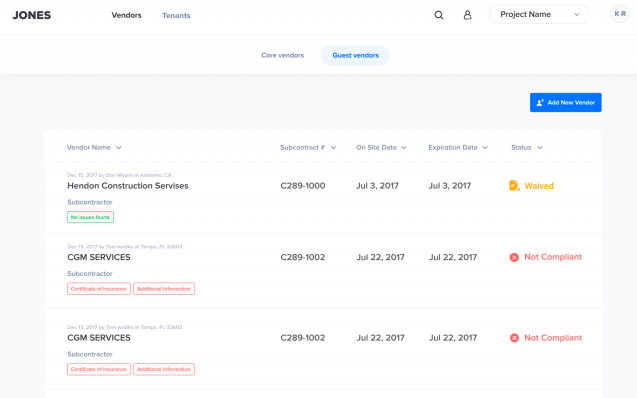
Jones is built specifically for large construction and real estate firms that need deep Procore integration and industry-specific workflows. It is the right pick for construction enterprises with established compliance teams that want bi-directional ERP integration and audit-ready reporting in construction-vendor language. Jones publishes a 24-hour COI verification SLA on getjones.com. It does not offer Smart COI live policy monitoring, source verification, or schedule-level data, which means certificates can be valid at submission and stale within days, and verification depends on manual carrier calls rather than direct agent-system data.
Jones built its platform specifically for large construction firms and real estate developers who need end-to-end compliance automation with industry-specific workflows. It's designed for enterprises managing multiple projects simultaneously, with hierarchical organization management and audit-ready reporting that speaks the language of risk managers.
Overview and Core Capabilities
Jones serves enterprises with existing project management systems that need COI tracking software that integrates directly with their daily workflows. Core features include:
- End-to-end automation for certificate collection and tracking across multiple construction projects
- Coverage gap detection that identifies deficiencies and generates Vendor communications (though it relies on OCR plus human review, so the official turnaround time (according to the information published on their website) takes 24 hours rather than seconds.
- Native integration with Procore and other construction management platforms
- Audit-ready reporting with comprehensive compliance documentation for risk and insurance audits
- Multi-project tracking with hierarchical organization management for enterprise structures
The platform handles policy verification and gap detection with a 24-hour SLA, though that turnaround can stretch during high-volume renewal months when everyone's scrambling to update certificates.
Advantages Over Competitors
Jones has strong brand recognition in the construction vertical, which translates to industry credibility when you're presenting your compliance system to stakeholders.
Their purpose-built workflows understand construction compliance requirements without customization, and their Procore integration is genuinely bi-directional, with data flowing both ways rather than requiring manual exports.
Customer support is solid (our rating is 4/5), with teams who understand construction terminology and regulatory requirements specific to real estate development projects.
Limitations
Jones starts to show its limitations when you compare what it can and can't do:
- No Smart COI capabilities - the platform can't monitor policies in real-time and automatically detect coverage changes after submission
- Limited fraud prevention since there's no source verification - Vendors can submit certificates, and verification happens through manual review rather than direct Agent connections
- Exclusively serves construction and real estate. If you operate in other industries, you're out of luck
- Limited user autonomy with one-size-fits-all automations - you can't customize the language or cadence of communications going out to Vendors
- Heavy dependence on the Jones team to modify data or manage your account settings - creates friction when you need immediate answers
The lack of customization and user control might be frustrating for teams that want to manage their own workflows rather than rely on Vendor support for routine changes.
Security and Risk Protection
Rating: MID
Jones offers semi-automated policy verification and coverage gap detection, but it relies on static PDF certificates submitted by Vendors - certificates that could be fraudulent or outdated.
Without Smart COI capability, the platform can't automatically detect coverage changes or verify certificate authenticity in real-time after submission.
The verification team might catch obvious issues during their 24-hour review, but sophisticated fraudulent certificates can slip through since the primary verification method is calling Carriers manually.
This limitation keeps compliance rates at around 65-75% (estimated), which is above basic automation but well below what's possible with real-time policy monitoring.
Pricing
Jones operates at the premium end with custom enterprise pricing based on user count and integrations.
There's no published pricing. You'll need a sales consultation to get a quote. Expect this to be more expensive than mid-market alternatives such as Certificial or MyCOI.
Jones is the best fit for large construction or real estate enterprises that need Procore integration and industry-specific workflows, with established compliance teams.
Skip Jones if you require fraud prevention capabilities, need to know if a Vendor canceled or changed the policy mid-term, operate outside construction and real estate, or you're a small to mid-sized business looking for cost-effective solutions with user autonomy.
Jones Scorecard
Who should choose Billy, and what are its construction-only limitations?
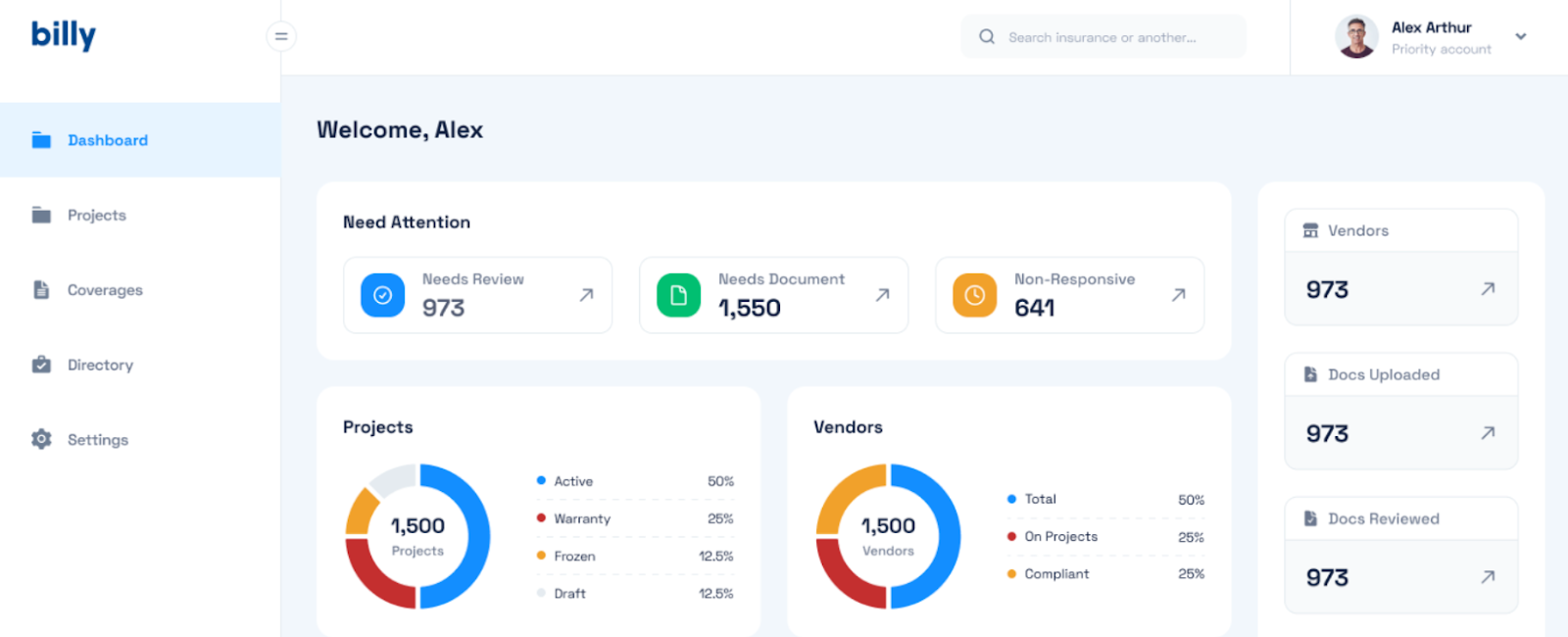
Billy is a narrow, construction-specific COI compliance platform built for general contractors and property managers verifying subcontractor insurance before move-in or service work begins. It is the right pick if budget is the primary constraint, the workflow is construction-only, and liability exposure is modest. Billy does not offer Smart COI policy monitoring, does not verify certificates with carriers directly, and accepts subcontractor-submitted certificates at face value. It also has limited integrations outside construction project management systems, so multi-industry portfolios will outgrow it quickly.
Billy carved out a narrow niche in construction COI compliance. It's built for teams who need to verify that Subcontractors carry the required insurance before move-in or service work begins.
Overview and Core Capabilities
Billy is a construction-vertical COI tracking platform built for general contractors, home builders, and property owners verifying subcontractor insurance before move-in or service work begins. The platform focuses on insurance compliance inside construction project workflows rather than across multi-industry vendor portfolios.
Core capabilities:
- Subcontractor COI collection and storage with automated request and reminder workflows
- Lease and project-tied insurance requirements that flag missing or expired coverage against move-in dates
- AI-assisted COI document review for common construction endorsements and certificate fields
- Procore side-panel integration for in-context compliance checks inside the Procore dashboard
- Basic expiration tracking and renewal reminders sent directly to subcontractors
- Construction-vendor language in vendor communications, matching how GC compliance teams already work
Billy accepts certificates submitted by subcontractors directly. It does not verify documents with insurance carriers or agents through a live data connection, which is the primary architectural difference between Billy and Smart COI platforms like Certificial.
Advantages Over Competitors
Billy's construction specialization means the interface and workflows match how construction teams actually work.
Lease integration eliminates manual tracking of insurance requirements against Subcontractor move-in dates.
The platform offers straightforward, transparent pricing, without the complexity or cost of enterprise platforms.
Limitations
Billy's narrow vertical focus is both its strength and weakness. If you operate in manufacturing, logistics, or retail, Billy won't work for your workflows.
Additional limitations:
- Basic verification with no advanced fraud detection or Smart COI capabilities
- Smaller platform that's less robust than other COI tracking software like Jones or Certificial - Limited integrations beyond construction project management systems
- Accepts Subcontractor-submitted certificates at face value without Carrier verification
Security and Risk Protection
Rating: LOW
Billy provides basic certificate collection and expiration tracking, but no fraud detection capabilities, no direct Carrier verification, and no Smart COI technology or real-time monitoring.
It accepts Subcontractor-submitted certificates without validation, leaving you exposed to fraudulent or altered documents. If a Subcontractor's policy gets cancelled mid-lease, Billy won't detect this until you manually request an updated certificate.
Billy Scorecard
How does CertFocus by Vertikal RMS compare on AI-powered COI processing?
CertFocus by Vertikal RMS is a full-service and self-service COI tracking platform built around Hawk-I AI, which parses certificate data, validates compliance rules, and runs quarterly verification calls with insurance agents to confirm coverage is still in place. It is the right fit for enterprise companies that want AI-assisted document processing with optional human-analyst review and published per-vendor pricing. Compared to Certificial, CertFocus operates at Layer 2 of the Smart COI Stack: it processes documents faster than legacy tools, but it does not have a live data connection to the agent management system, so mid-term policy cancellations show up at the next quarterly check rather than within seconds.
CertFocus Overview and Core Capabilities
CertFocus by Vertikal RMS targets enterprise companies across 25+ industries managing high-volume certificate processing. Vertikal RMS reports Fortune 500 customers including Ace Hardware, Buffalo Wild Wings, and NASCAR on vertikalrms.com.
Core capabilities:
- Hawk-I AI document parsing for automated certificate review and rule-based compliance checks
- Quarterly carrier and agent verification calls to confirm active coverage between renewals
- Three service models: self-service software, full-service managed compliance, and hybrid
- Bi-directional API integration with ERP, AP, and vendor management systems
- AM Best rating verification with automated alerts when carrier ratings drop
- Unlimited platform users and document storage at every service tier
- Credentialed insurance professionals (CIC, CPCU, CISR, CRIS) review documents in the full-service tier
CertFocus's Advantages Over Competitors
Vertikal RMS has been in the COI tracking market since 2008 and has built out three service tiers that let customers match service depth to risk profile. The AI-plus-human-analyst review model is faster than Ebix or MyCOI for high-volume document processing. Pricing is published transparently: $6-8 per vendor per year for self-service, $13-29 per vendor per year for full-service, with unlimited users included. The Hawk-I AI is positioned as a competitive feature against legacy OCR-only platforms.
CertFocus's Limitations vs Smart COI
CertFocus's verification cycle is quarterly carrier-call based, not live data feed. A policy cancelled in February will typically not show up in the CertFocus account until the next scheduled quarterly verification, which can be 30-90 days after the cancellation. This is meaningfully different from Smart COI live monitoring, where the same cancellation appears within seconds. CertFocus also does not publish schedule-level verification (specific vehicle VINs, equipment serial numbers, or named locations), so compliance is rolled up to the policy level rather than the asset level. For high-risk operations where a specific truck or piece of equipment showing up on a jobsite needs to be verified covered, the schedule-level gap is operational, not theoretical.
CertFocus's Security and Risk Protection
Rating: MID-HIGH. CertFocus offers Hawk-I AI document parsing plus quarterly carrier verification, which catches more compliance gaps than basic document tracking. The platform does not offer source verification (vendors can still upload certificates), so forged or pre-cancellation documents can pass the AI scan if the language looks right. The compliance ceiling under this architecture sits around 80-85%, above document-tracking platforms but below the documented 90%+ rates achievable with Smart COI live policy data.
CertFocus's Pricing
CertFocus publishes pricing transparently on vertikalrms.com: $6-8 per vendor per year for self-service software, $13-29 per vendor per year for full-service with credentialed insurance professionals, and a vendor-pay option at $85-150 per vendor per year that passes costs to suppliers. Annual minimums apply. Unlimited platform users included.
Best for: Enterprise companies that want a published per-vendor price, AI-assisted document processing, and the option to mix self-service and full-service across business units. Skip if: real-time mid-term cancellation detection or schedule-level verification matter for the risk profile.
CertFocus Scorecard
- Protection Against Fraud: Mid-High - AI document review and quarterly carrier verification
- Smart COI Technology: No - quarterly verification, not live data feed
- Compliance Rate: Estimated 80-85% (no public customer case study with verified rate)
- Pricing: $ to $$ - Published $6-29 per vendor per year, by service tier
- Ease of Use: 4/5 - dedicated Client Success Manager
- Customer Support Effectiveness: 4/5 - credentialed analysts available in full-service tier
- Overall Score: 3.8/5
Which COI tracking software should you choose, and how do they compare side-by-side?
Choose Certificial if real-time policy monitoring and fraud prevention are top priorities and you can document the ROI from preventing a single uninsured incident. Choose Jones if you are a large construction enterprise that needs Procore integration above all else. Choose Billy if you are a small construction operation and budget is the binding constraint. Choose MyCOI, TrustLayer, Ebix, or SmartCompliance if you accept the 60-70% compliance ceiling that comes with document-based tools and the residual fraud risk that comes with vendor-submitted PDFs. The full side-by-side scoring is in the table below.
Let's compare all COI tracking software side-by-side:
Recommendations by Use Case
Choose Certificial if:
- Fraud prevention and risk reduction are top priorities
- You need proven compliance outcomes with 90%+ rates
- Real-time policy monitoring is critical for high-risk Vendors and you need to know within seconds when coverage gets cancelled or reduced
- You operate in construction, manufacturing, transportation, or logistics with significant insurance requirements
- Schedule-level verification matters - you need to confirm specific vehicles (by VIN), equipment (by serial number), or locations are actually covered on policies
- ROI justification matters: time savings and prevented losses justify moderate pricing, or you have fewer than 5 Vendors and can use their free plan
- Book a demo of Certificial to see how real-time policy monitoring can help you achieve 90%+ compliance rate
Choose CertFocus, MyCOI, Ebix, SmartCompliance, or TrustLayer if:
- You have low-risk Vendor relationships and limited fraud concerns
- Budget constraints prioritize low cost over risk reduction
- Basic automation of certificate collection and expiration tracking meets your needs
- You're comfortable with 60-70% compliance rates and the exposure that creates
Choose Jones if:
- You're a large construction or real estate enterprise already using Procore, and don't mind waiting 24 hours for verification or not having real-time visibility into COI validity
- Industry-specific workflows outweigh fraud prevention concerns
- Enterprise features and audit reporting are requirements
Choose Billy if:
- Budget is the primary concern and liability exposure is minimal
The Critical Question
Your software choice ultimately answers this question: are you tracking certificates or managing insurance risk?
Traditional platforms like MyCOI, Billy, Ebix, and SmartCompliance track certificates - confirming a PDF exists in your files. Mid-tier platforms like Jones and TrustLayer add verification workflows and automation.
Only Certificial monitors actual insurance policy status in real-time through Smart COI technology.
The compliance rate differential is documented in the PowerFlex case study: 60-70% with their previous document-based COI tracking system, climbing to roughly 90% within a year of moving to Certificial's Smart COI technology. The fraud protection differential is even starker: accepting PDFs at face value versus 100% fraud elimination through source verification.
For organizations managing significant Vendor insurance requirements, the choice comes down to what you're actually trying to protect against.
What is the single biggest mistake buyers make when choosing COI tracking software?
The most common mistake is optimizing for ease of use and software cost while ignoring the core problem the platform should solve: protecting the organization from uninsured liability. Document-based tools digitize the paper-chasing problem but do not address it architecturally. Fraud remains possible because vendors can still upload documents, and certificates remain stale because policies change between renewals. Smart COI technology and source verification are not premium add-ons. They are the foundation of effective insurance compliance, and skipping them produces a 60-70% compliance ceiling regardless of how clean the UI looks.
If fraud prevention and compliance outcomes matter more than budget minimization, Certificial stands alone as the only platform that solves the fundamental vulnerabilities in COI tracking: Vendor-submitted forgeries and outdated coverage data.
Three actionable next steps based on your situation:
- High-risk operations (construction, manufacturing, transportation): Request a Certificial demo and calculate ROI based on time savings (PowerFlex case study: about 3 hours per week per insurance manager) and risk reduction (single uninsured incident can cost $500K+). The compliance rate improvement alone (60-70% to ~90% in the documented PowerFlex case) often justifies the investment within the first prevented incident.
- Mid-risk operations with enterprise requirements: Evaluate Jones if you're construction-focused with Procore integration needs, or TrustLayer if you prioritize modern UX. Accept that you're trading fraud prevention and real-time monitoring for lower costs or specific features.
- Low-risk operations (small Vendor counts, low liability exposure): MyCOI or Billy provide basic automation at affordable pricing. Understand you're tracking certificates, not monitoring actual risk.
The most common mistake in COI tracking software selection: optimizing for ease of use and cost while ignoring the core problem these platforms should solve - protecting your organization from uninsured risk.
Smart COI technology and fraud prevention aren't premium features. They're the foundation of effective insurance compliance.
Make your choice based on whether you're willing to accept the vulnerabilities of traditional tracking or need the protection that only real-time policy monitoring provides.
Frequently asked questions about COI tracking software
What is a Smart COI and why does it matter for compliance?
A Smart COI is a direct, real-time connection to insurance Carrier or Broker data that monitors actual policy status rather than relying on static PDF certificates.
Traditional COIs are snapshots - accurate at submission but unable to detect if coverage is cancelled, limits are reduced, or specific assets are removed from policy schedules later. Smart COIs update continuously (in Certificial's case, within seconds of changes in the Agent's system), automatically alerting you to coverage changes.
This matters because it solves the "stale certificate problem" that causes most compliance failures. A certificate can show valid coverage through December, but if the policy gets cancelled in March, traditional tracking won't detect this until you manually request renewal. Smart COIs reflect the cancellation immediately.
PowerFlex moved from a 60-70% compliance rate to roughly 90% within one year of switching to Certificial's Smart COI technology, while saving about three hours per week per insurance manager (PowerFlex case study).
How does Smart COI technology actually work?
Smart COI technology is a live data connection from Certificial to the insurance agent's policy management system. When the agent updates a vendor's policy (cancellation, limit reduction, schedule modification), the change propagates to Certificial within seconds and reflects in the customer's account. The vendor never touches the document. The certificate becomes a real-time view of policy state, not a static PDF snapshot. This eliminates the verification gap that causes document-based COI tracking to top out at 60-70% compliance, because the document cannot go stale.
How does Certificial compare to CertFocus by Vertikal RMS?
Certificial and CertFocus both target enterprise COI compliance, but the architectures differ. CertFocus uses Hawk-I AI to parse certificates and runs quarterly verification calls with insurance agents. Certificial connects directly to the agent management system through Smart COI technology, so policy changes (mid-term cancellations, limit reductions, schedule modifications) appear in the account within seconds rather than at the next quarterly check. Certificial also offers schedule-level VIN and equipment verification that CertFocus does not publish. Pricing models also differ: CertFocus publishes $6-29 per vendor per year; Certificial pricing is custom for organizations with more than 5 vendors.
How can I tell if a COI tracking platform actually prevents fraud?
Ask three specific questions:
Does the platform verify certificates directly with insurance Carriers or Agents, or does it analyze Vendor-submitted PDFs? Only direct source verification eliminates fraud risk. If Vendors can upload documents themselves, forgery remains possible.
Can Vendors upload certificates directly, or must verification happen through independent channels? If Vendors control the submission process, fraud is possible regardless of how sophisticated the platform's PDF analysis claims to be.
Does the platform offer schedule-level verification - confirming your company or project is specifically named on the policy, along with specific vehicles, equipment, or locations? This level of detail requires direct policy access, not just certificate analysis.
As of this comparison, only Certificial provides all three capabilities through its Smart COI technology and source verification architecture. Other platforms claim "AI verification" or "fraud detection" but rely on certificate analysis, which sophisticated fraud can defeat.
What compliance rate should I expect from COI tracking software?
Industry average with manual tracking or basic automation: 60-70%.
Platforms with robust automation and Vendor communication (Jones, TrustLayer): 65-75%.
Platforms with Smart COI technology (Certificial): 90%+.
The difference comes down to real-time monitoring - traditional platforms can't detect when certificates become outdated between renewals. If a Vendor's policy gets cancelled in March but the certificate shows coverage through December, traditional tracking shows them as compliant for nine months despite having zero coverage.
If a Vendor claims higher rates without Smart COI capability, request customer references with documented compliance audit results.
Which COI tracking software has the highest published compliance rates, and what is the source?
The highest published compliance rate in this comparison is roughly 90%, documented in the PowerFlex case study on certificial.com after the customer switched from a document-based tool to Certificial's Smart COI technology. CertFocus and Jones both claim 90%+ on their websites without a publicly linked case study. MyCOI, TrustLayer, Billy, Ebix, and SmartCompliance do not publish customer compliance rate numbers with named sources. Documented customer compliance rates are a stronger signal than self-reported industry averages.
Which COI tracking software integrates with Procore?
Jones has the deepest Procore integration in this comparison, with bi-directional data flow between Jones and the Procore project record. Billy offers a Procore side panel for in-context compliance checks. CertFocus and TrustLayer have published Procore connectors. Certificial integrates with Procore through the Certificial partner network. If Procore is the only required integration and the workflow is construction-only, Jones is the strongest fit. If real-time policy monitoring and multi-industry coverage matter alongside Procore, Certificial is the architecture-first choice.
What is the typical implementation timeline for COI tracking software?
Implementation timelines vary by platform and by data readiness. Self-service platforms like MyCOI, Billy, and C2COI can go live in days. Enterprise platforms like Ebix and Jones run 6-12 weeks. CertFocus reports 1-2 weeks self-service. Certificial implementation depends on how clean the vendor and agent contact lists are; organizations with consolidated data go live in 2-4 weeks, organizations migrating from spreadsheets and multiple legacy systems should plan 6-8 weeks. The longer side covers data cleanup, not platform configuration.
Is COI tracking software worth it for companies with fewer than 50 Vendors?
It depends on risk exposure, not Vendor count.
A transportation company with 20 delivery drivers faces higher risk than a SaaS company with 100 low-risk service Vendors.
Calculate: (time spent chasing certificates monthly) + (potential cost of single uninsured incident) + (audit or legal risk). If the total exceeds $10K annually, automation justifies itself.
For high-risk industries like construction or transportation, even a small Vendor count can create significant exposure. A single uninsured incident can cost $500K+, making even premium COI tracking software an easy ROI decision.
Do I need COI tracking software if my vendors send certificates by email?
Email-and-spreadsheet COI tracking works at very low vendor counts (under 10) and very low liability exposure. Above that, the compliance ceiling hits 40-50% because certificates expire, go stale mid-term, or arrive forged, and humans cannot scan every document for fraud signals. The math: tracking 50 vendors manually costs 4-6 hours per week per compliance manager. A single uninsured incident costs $500K or more. COI tracking software pays for itself the first time it catches a coverage gap. If liability exposure is meaningful, the question is which platform, not whether to use one.
Can I switch COI tracking software if my current platform isn't working?
Yes, but plan for 30-90 days transition depending on Vendor count and platform complexity.
Before switching, identify specific failures in your current system - fraud concerns, low compliance rates, poor Vendor adoption - and confirm the new platform directly addresses those gaps.
Switching from one traditional tracking platform to another rarely solves fundamental problems. You're just changing interfaces. If your current platform can't detect mid-term policy cancellations or verify certificate authenticity. The most important question: does the new platform offer Smart COI technology and source verification, or is it another system that accepts Vendor-submitted PDFs and hopes nothing changes?
*Certificial research team evaluates COI tracking tools using vendor demos, user feedback, and documented feature tests.
Looking for a digital Insurance verification platform? We created a buying guide: Digital Insurance Verification Platform: 10 Features You Must Demand Before Signing a Contract


C.svg)